




Cart is empty. Please go to your home page for listing it.
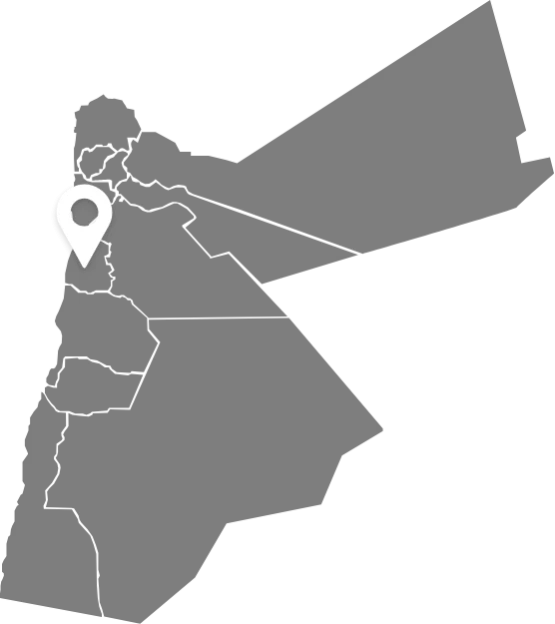
Mujib Biosphere Reserve was established in 1985 and is located
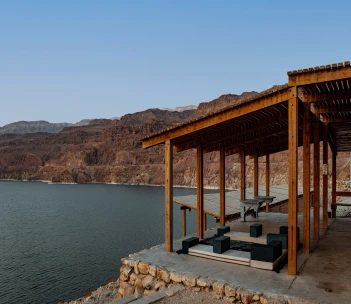
along the eastern shore of the Dead Sea in the Hashemite Kingdom
of Jordan. It covers an area of approximately 212 km² and extends about 24 km
along the Dead Sea coastline. The reserve is part of the Jordan Rift Valley
landscape, with elevations ranging from 402 meters below sea level to about 800
meters above sea level in the eastern highlands.
The reserve is managed by the Royal Society for the Conservation of
Nature as part of integrated ecosystem management programs in the Jordan
Valley. It is considered one of the most important biodiversity hotspots in
Jordan due to its diverse habitats and the presence of species of national,
regional, and global conservation concern.
Mujib Biosphere Reserve encompasses two major biogeographical
zones: the Irano–Turanian zone and the Sudanian (Acacia and rocky) zone. It
also includes five main vegetation types: Irano–Turanian (Steppe),
Mediterranean, Saline, Tropical, and Aquatic vegetation. This ecological
diversity has significantly contributed to high levels of biodiversity within
the reserve.
The reserve features a complex drainage system made up of three
main streams: Wadi Mujib, Wadi Hidan, and Wadi Zarqa Ma’in, along with several
perennial wadis such as Wadi Attoun, Wadi Abu Retama, and Wadi Shegeig. These
wadis provide permanent and seasonal water flow, creating unique wetland
habitats that support rich wildlife populations. They also contribute to the
Dead Sea, one of the lowest points on Earth, and play a key role in its
hydrological balance.
Mujib Reserve has been recognized as a wetland of international
importance and as an Important Bird Area (IBA) along the African–Eurasian
migratory flyway. Its location makes it a critical stopover site for feeding,
resting, and breeding of migratory birds traveling between Africa and Europe.
The reserve contains diverse habitats including rocky wadis,
springs, oases, steppe vegetation, and riverine ecosystems. These habitats
support a wide range of wildlife, including mammals such as the Nubian ibex (Capra
nubiana), rock hyrax, and Eurasian badger, as well as predators like the
caracal (Caracal caracal).
Mujib is also internationally important for migratory birds,
including white storks, black storks, buzzards, honey buzzards, and Levant
sparrowhawks. It also supports breeding populations of globally threatened
species such as the lesser kestrel (Falco naumanni) and several raptors.
In addition, the reserve supports significant genetic biodiversity,
including plant and animal species of ecological, medicinal, and economic
importance. However, many of these species are under pressure due to
overgrazing, hunting, deforestation, and other human activities.
Conservation efforts in Mujib include habitat protection,
biodiversity monitoring, rangeland management, species reintroduction programs,
enforcement of regulations, and environmental awareness initiatives aimed at
ensuring long-term ecosystem sustainability.
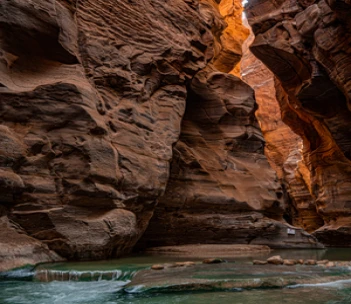
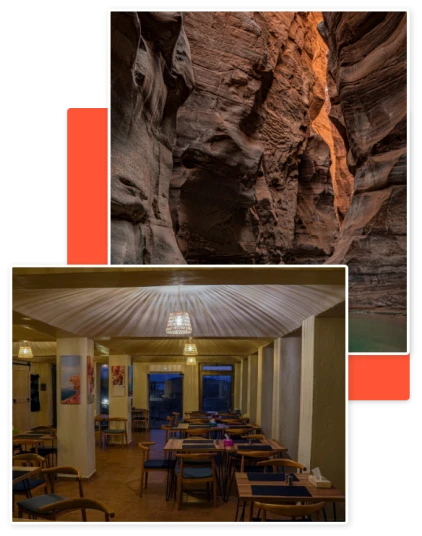
At 410 meters below sea level, the Mujib Biosphere Reserve is the lowest nature reserve on Earth. Its rugged and spectacular mountains border the Dead Sea coast and are dissected by several river-filled canyons that offer the best river and adventure hikes in Jordan. The breathtaking scenery and the challenge of negotiating Mujib’s fast-flowing rivers make the Reserve one of Jordan’s most popular natural attractions.
Mujib’s complex river system and all-year water flow enable it to support a rich biodiversity. To date, over 300 species of plants, 10 species of carnivores and numerous species of resident and migratory birds have been recorded. Some of the mountain and valley areas are difficult to reach and offer safe havens for rare species of cats, mountain goats (Ibex) and other mountain animals.


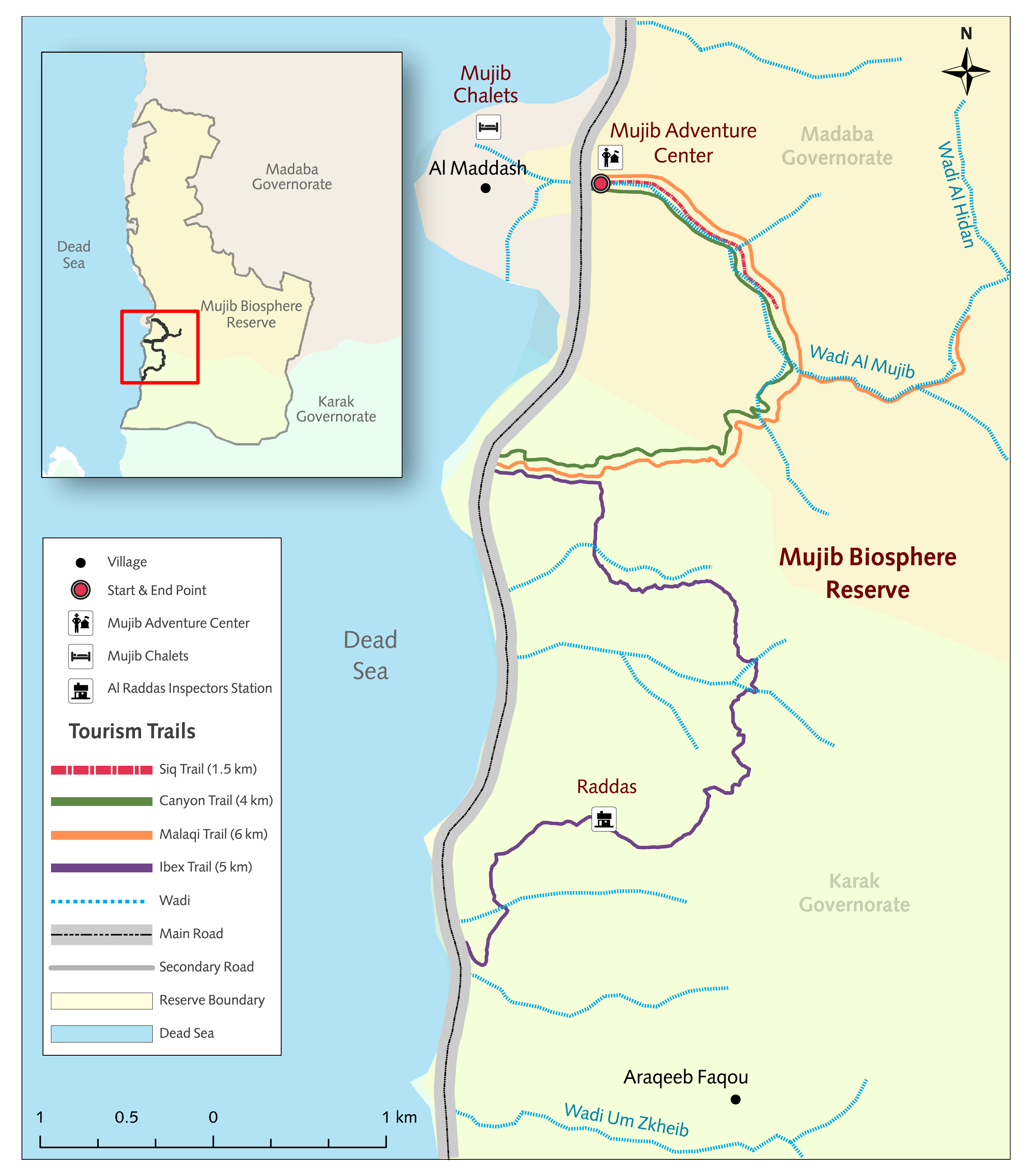 Mujib trails map