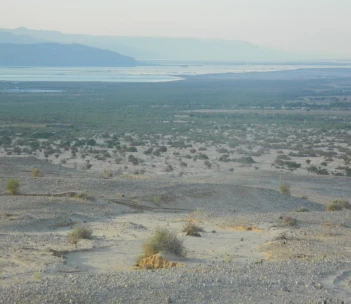
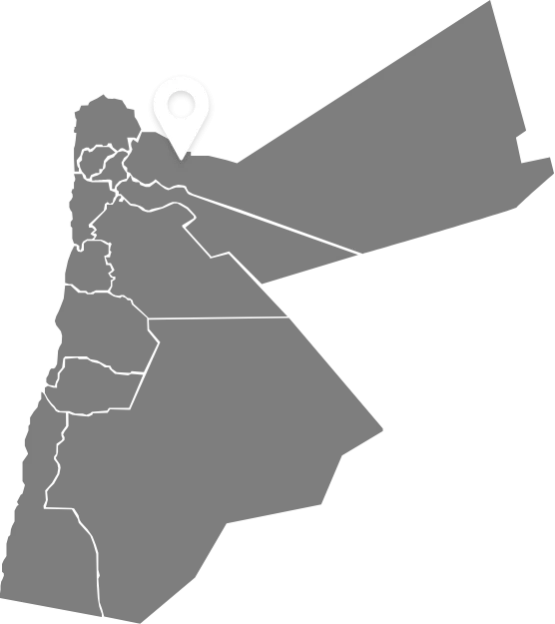
Fifa Nature Reserve is located in the southwestern part of the
Hashemite Kingdom of Jordan, along the southern edge of the Dead Sea, approximately
140 km south of the capital Amman. Its western boundary forms the international
border between the Hashemite Kingdom of Jordan and the occupied Palestinian
territories. Administratively, it belongs to Karak Governorate. The reserve
covers an area of about 25 km² and lies within lands owned by the Jordan Valley
Authority. It is officially designated as a protected area under a Ministry of
Environment decision and is managed by the Royal Society for the Conservation
of Nature.
The reserve was established in 2011 through the Integrated
Ecosystem Management Project in the Jordan Valley, implemented by the Royal
Society for the Conservation of Nature. It was named after the Ghor Fifa area.
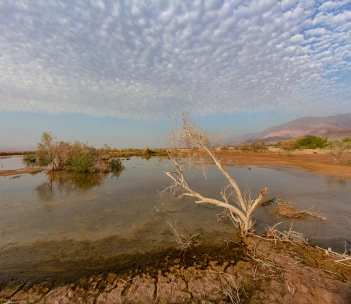
The reserve aims to protect unique ecological and vegetation patterns,
particularly halophytic (salt-tolerant) vegetation and tropical vegetation
types.
In 2017, Fifa Nature Reserve was declared the lowest Ramsar site in
the world, lying approximately 420 meters below sea level. This designation
made it the second site managed by the Royal Society for the Conservation of
Nature to be included on the global list of Wetlands of International
Importance.
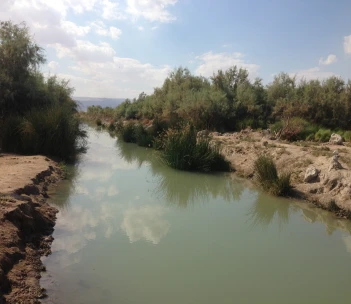
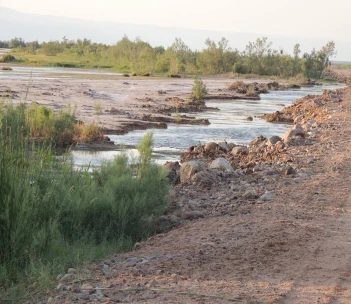
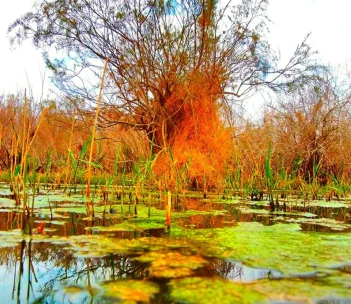
The vegetation cover of the reserve is highly diverse and forms a
green landscape within the surrounding desert environment. Studies conducted by
the Royal Society for the Conservation of Nature recorded a total of 127 plant
species, including at least seven threatened species of high conservation
importance, such as the Arak tree (Salvadora persica), for which Fifa is
one of the few natural locations in Jordan where it occurs. The reserve also
contains several locally threatened plant species, including date palms,
umbrella thorn acacia, reeds, and the Moringa tree.
Regarding fauna, 17 mammal species have been recorded, including
carnivores, ungulates, and rodents, most notably the caracal, hyena, and wolf.
In addition, 4 reptile species have been documented, the most important being
the spiny-tailed lizard (Uromastyx aegyptia), which is threatened due to
overhunting.
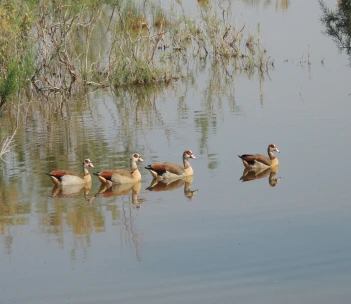
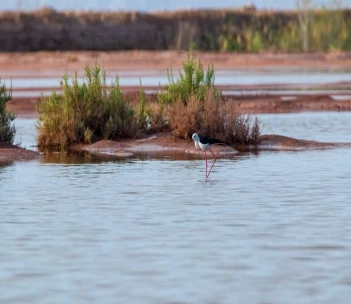
The reserve lies along the second most important global migratory
bird flyway, making it a significant resting and feeding habitat for migratory
and resident birds, especially species threatened at national and regional
levels, such as the Dead Sea Sparrow (Passer moabiticus) and the Nubian
Nightjar (Caprimulgus nubicus). A total of 117 migratory and resident
bird species have been recorded within the reserve.
The reserve also hosts the largest breeding aggregations of the
Nubian Nightjar in the breeding season, a species with a restricted
distribution in the southern Dead Sea region and Africa. In addition, both
permanent and seasonal wetlands within the reserve represent one of the most
important stopover sites for migratory birds along the main flyway through the
Jordan Valley (Rift Valley).
Furthermore, the reserve hosts an endemic fish species known as the
Richardson’s Killifish (Aphanius richardsoni), a secondary freshwater
species of marine origin. This species is increasingly threatened due to
habitat loss caused by various water uses, as well as the impact of invasive
species in its habitats.